


College of the North Atlantic (CNA) has hired Canadian Forces veteran Gary Rideout to strengthen the college’s emergency preparedness. Managed under the Public Affairs and Advancement division, Rideout started in the new Emergency Management Consultant position in December 2024.
Born, raised and now based in Gander, Gary made a second career helping to resolve major incidents such as the Exxon Valdez Tanker Oil Spill in 1989, the CF 18 Crash off Vancouver Island Coast in 1990, two child abduction cases (Micheal Donnie in Victoria, BC, and Adam Finch in Florida), and Hurricane Opal in 1995. Since his return to Newfoundland and Labrador in 2007, he has been working in emergency management for Vale’s Long Harbour operations and the Muskrat Falls project.
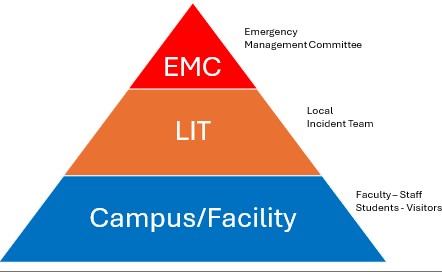
Gary’s position plays an essential role at CNA, working to maintain CNA’s compliance with laws and regulations, implement a universal emergency response system, organize and deliver training where required, and advise the Emergency Management Committee (EMC) and campus Local Incident Teams (LIT) on security and crisis management. Gary brings his expertise in best practices, response to critical events, and collaboration with stakeholders to enhance security and emergency services, ensuring operational readiness and safety across the institution.
Working with the college’s EMC, Gary launched the new year by developing three strategic goals to align the sustainable growth and development pillar in CNA’s Strategic Plan. These long-term objectives are intended to aid the organization in enhancing its existing Emergency Preparedness mission and vision, he explained.
“It will guide us with direction and focus for decision-making and resource allocation,” he says. “By setting these strategic goals, our team can align its efforts and measure progress towards achieving its overarching CNA objectives.”
Strategic Goals
- Emergency Communications
Gary notes organizations need to have easy and quick access to emergency plans and procedures, crucial for ensuring everyone knows what to do in case of an emergency. The first step is to review and update the current emergency communications plan to ensure that it remains effective and incorporates new technologies and lessons learned from past incidents involving the college community.
“I’m hearing that folks want an alignment – common terminology, common training – something to get everybody to the same level,” he shares. “When I was looking at it and starting to diagnose and get more granular with each campus, they kind of were doing the same thing, yet they’re not sure if they’re doing the right thing, you know?”
At the same time, Gary and team recognize that some procedures need to be campus-specific and not standardized across the 17 campuses and their programs.
“We understand that campuses have uniqueness; recognizing the diverse aspects of each campus allows for tailored emergency plans that address specific risks and needs, making the overall response more effective,” he says.
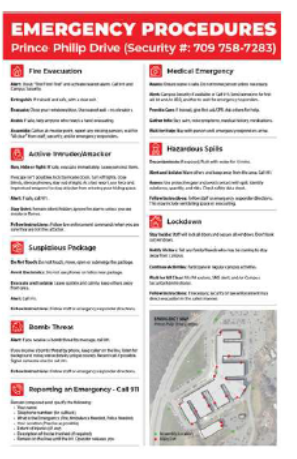
“For example, Gander campus – they have aviation programs, which are unique from other campuses. Also, PPD has a veterinary program, which of course incorporates animals on the premises. This diversity needs to be considered in emergency planning and reflected in emergency procedures for the given campus, as seen in each campus’s Emergency Procedures poster.”
- 2.Emergency Response Training
Providing emergency response training to CNA staff is crucial to ensure that the institution can handle various emergencies and reduce panic and confusion during actual incidents.
In fact, Gary says it is a regulatory requirement to have trained emergency response on all campuses.
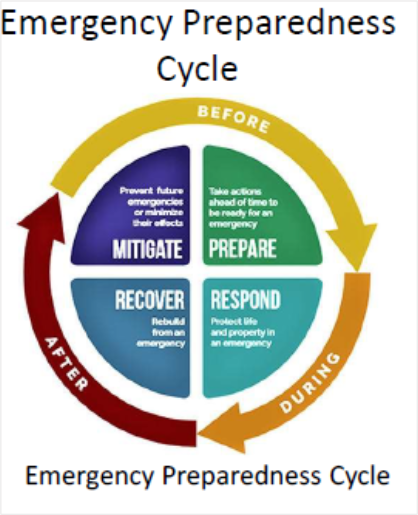
“Trained staff ensures that all responders are on the same page, on the same emergency plan, in order to facilitate better coordination and communication during an incident. We will follow the Emergency Response Cycle, which consists of four phases: mitigation, preparedness, response and recovery.”
According to this cycle, mitigation involves reducing disaster impacts before they occur, while preparedness ensures readiness through planning and training. Response focuses on immediate actions during an event and recovery then aims to restore business resumption. Each phase is essential for effective emergency management.
3. Campus Risk Survey and Risk Assessment
Gary says the key focus for his role is to have every campus trained and operating on the same level. That begins with a risk survey and a risk assessment for each location.
A risk assessment involves identifying potential hazards – recognizing anything that could cause harm; analyzing risks – assessing the likelihood and impact of these hazards; evaluating risks – determining the significance of the risks and deciding on their acceptability; mitigating risks – implementing measures to reduce or eliminate risks; and monitoring and reviewing – continuously checking and updating the risk assessment to ensure effectiveness.
“Once we build a risk assessment, then we’ll have a risk registry and we’ll know all the things that can go wrong and specifically how we’d respond if this happens,” says Gary.
The importance of the assessment is to be prepared for an emergency – or to prevent it altogether.
“Something might not be considered an emergency at one point, but it could be pre-emptive to emergency, meaning that if we don’t address it, it could become an issue.”
CNA’s Emergency Response Structure is based on the Incident Command System (ICS), a standardized approach to the command, control and coordination of emergency response. It provides a common hierarchy within which responders from multiple areas of expertise come together to solve emergency events.
One of the primary goals of ICS is to enable personnel from different agencies to work together seamlessly. It uses common terminology and procedures to facilitate communication and coordination.
“The ICS system was adopted back in the 1970’s to deal with the devasting wildfires in California,” Gary explains. “It has since evolved to be used in all hazards situations or any type of emergency response that requires a collective team approach.”
Where are we now?
Gary kicked off the training with an expanded Emergency Management session for members of each LIT, including Senior Campus Directors, Campus Directors, Mangers, and Senior Administration Management Services.
Provincial training followed – pertaining to Basic Emergency Management, Emergency Operations Centre Management and Scribing for the EMC team. Further customized training was delivered by the Justice Institute of British Columbia (JIBC) ensured current EMC members have ICS 300 training.
“An emergency response is a set of actions taken to deal with unexpected and potentially dangerous situations,” Gary explains. “It involves quickly assessing the situation, calling for help if needed, and taking steps to protect yourself and others to gain control of the event and recover to normal or resume business operations. The goal is to minimize damage and ensure everyone’s safety.”
With that in mind, Gary is visiting campuses, updating emergency procedures posters, and undertaking a risk survey. Things are going according to plan, and he has found that CNA is in good shape with respect to emergency response.
If CNA stays the course, says Gary, it should be in excellent shape in short order.
“As John F. Kennedy once said, ’The time to repair the roof is when the sun is shining.’”
